sf blue tech
june happy hour 2026
can data de-risk california’s $51 billion ocean economy?
june 11
5:30pm – 8pm
south beach yacht club
$15 / $20 after june 3
California coastal waters are becoming more acidic and losing oxygen faster than coastal waters almost anywhere else in the world.
This increasingly puts the state’s marine ecosystems and its $51bn ocean economy at risk.
Ocean Data Pinpoints Risks
Economic impacts from hypoxia and ocean acidification are multi-faceted and immediate. California waters face a multi-stressor world where acidification will compound the effects of rising temperatures and declining oxygen levels; both threaten ecosystem stability. Altered ocean chemistry will likely lead to cascading environmental and public health concerns.
To analyze and predict shifts, a new marine data analytics platform shows promise:
- Shellfish growers can improve crop survival by better timing outplanting of baby oysters to coincide with days of lower ocean acidity
- Commercial fishermen can better monitor Dungeness crab* populations (*2025 harvest resale value $56 million), which are increasingly fleeing due to the rise in oxygen-depleted habitats.
Blue Tech Innovation Data
The California Ocean Acidification and Hypoxia (OAH) Portal pulls data from 20 million ocean observations to provide access to real-time, modeled and remotely-sensed conditions. Developed by Dr. Alex Harper and team at the Central & Northern California Ocean Observing System, ocean tech start ups, students, scientists, sailors, research teams and others can use results for:
x
- Business development
- App creation
- Research and education
presenter
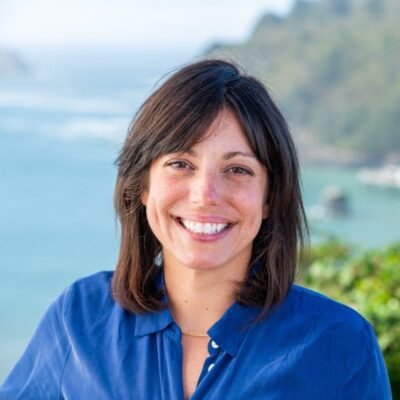
Alex Harper, Ph.D.
Deputy Director
Central & Northern California
Ocean Observing System (CeNCOOS)
Alex Harper, Ph.D. is the Deputy Director, Central and Northern California Ocean Observing System (CeNCOOS). Often cited for her expertise on ocean change, notably acidification and hypoxia, she is a key coordinator for California’s ocean observation efforts.
Harper helps lead the statewide data integration and delivery system which aggregates, curates and disseminates real-time ocean data that is required by weather forecasting, maritime operations, ecosystem health and coastal resilience decision-makers.
She previously served as Program Manager for CeNCOOS at the Monterey Bay Aquarium Research Institute before relocating to Cal Poly Humboldt. Prior to CeNCOOS, she worked for the NOAA U.S. Integrated Ocean Observing System (IOOS) in Silver Spring, MD, and was a fellow with the NOAA Ocean Acidification Program. Harper earned a Ph.D. in Chemical Oceanography and M.S. in Aquatic Science from Florida State University.
CeNCOOS is a U.S. Government-accredited, regional source for high-quality data, integrated information and diverse expertise for real-time and forecasted information on a range of subject matter, including integrated assessment tools for Marine Protected Areas (MPAs), harmful algal blooms, animal telemetry and more.
hosted by

june happy hour 2026
5:30pm: networking, dinner and drinks
6:30pm: welcome
6:45pm: presentation
7:30pm: Q&A
return to networking
Get added to mailing list to receive event notices and more.